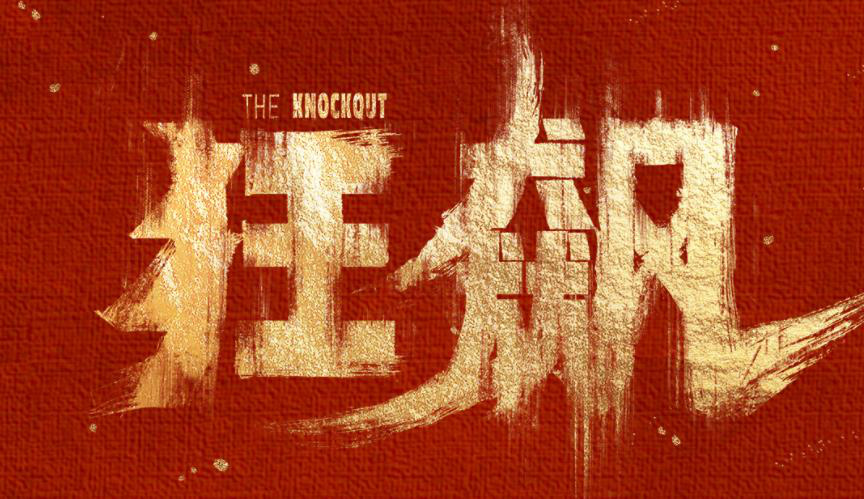
Recently, 39 episodes of anti-gang criminal investigation dramas produced by CCTV and iQiyi, directed by the Central Political and Legal Committee, directed and starring, were widely praised by the audience and caused extensive and heated discussions. The Knockout’s artistic processing is based on real people and cases in reality, which truly and vividly shows the great efforts and remarkable achievements made by China’s political and legal system education in recent years to rectify the law enforcement team and promote the normalization of eliminating evils. The drama is intense and thrilling, with ups and downs and fascinating plots, three-dimensional characters and full images, and a clear and thought-provoking theme. It not only made an important breakthrough in art, but also gave us profound practical enlightenment.
The Knockout’s structure is quite ingenious. The play shows a protracted life-and-death contest between justice and evil. An Xin, a grass-roots criminal police officer, got to know Gao because of the fight case of Gao Qiqiang, a fish vendor. He sympathized with Gao Qiqiang’s poor background and unfortunate experience, and gave him warm care and enthusiastic help, thus forming an indissoluble bond between them. Unexpectedly, Gao Qiqiang later became the boss of Qiangsheng Group, the largest enterprise in Jinghai City, from a bullied fishmonger, but in fact he was the leader of local black and evil organizations. In order to eradicate this black and evil organization, the political and legal police officers represented by An Xin have worked hard for 21 years, and finally wiped out Gao Qiqiang’s criminal gang and its "umbrella", ensuring the safety of the people and keeping the wind clean and upright. With a main line (eliminating evils), two parallel narrative lines (the growth and development history of the two protagonists), and three relatively independent and interwoven time paragraphs and plot units (2000, 2006 and 2021), the whole drama presents the complicated social changes, personnel changes, grievances and enmity and the struggle between good and evil in the past 21 years to the audience in a concentrated, compact and hierarchical way. This kind of TV drama structure, which is absorbed from drama and movies, not only avoids the dull and lengthy plot, but also is very inclusive and expressive, which is a useful exploration of TV drama structure art.
The Knockout focuses on people and humanity. Different from the common narrative mode of the same type of TV series, the drama does not use a lot of pen and ink to describe the detection process of the case, nor does it deliberately pursue and create suspense, but focuses more on the concern for the fate of the characters and the excavation of complex human nature. It is on this premise that the successful shaping of the group images of political and legal police officers in this play can be realized. There are a large number of political and legal police officers in the play, but their personalities and fates are different, and there are few similarities. Master Gong Anxin is an almost perfect image of a criminal police officer. He sticks to his faith, gives himself up for the public, values the police uniform and badge on his head above everything else, and is brave, indomitable and desperate for his responsibilities and mission. He is not only an impartial law enforcer, but also a warm man who is enthusiastic and brave. He is both "stupid" and "axis", but he is so lovely and respectable. Some people say that An Xin’s image is too idealistic, and there can be no such criminal police in reality, so it is not true. We need to know that art originates from life and is higher than life. Art is an idealized expression of life to a great extent, so we can’t simply measure the truth of art by the truth of life. Imagine that we have met officials who are exactly the same as Bao Gong in real life. Can we deny the existence of honest officials because of this? Except an Xin, the core figure, most of the images of other political and legal police officers did not run through the whole play or did not have much ink, but they were distinctive and impressive.For example, An Changlin, who seems to be doing nothing, has always been quietly protecting and supporting Anxin in his anti-gang work. Li Xiang, who took bribes under multiple pressures and endured the struggle, finally ended up making amends with the criminals. Lu Han, who is as stubborn and more brave as Master Anxin, was brutally killed by black gangs. In addition, there are Cao Chuang, Zhang Biao and Yang Jian, who have made outstanding contributions as police officers of politics and law for a long time, but failed to keep the bottom line and were dragged down by evil forces, and Gong Kaijiang, Zhao Lidong and He Liming, who are leaders of political and legal departments but lost their party spirit and craved for money and enjoyed being corrupted by evil groups. It can be said that in the film and television works, The Knockout has shaped the group image of political and legal police officers in an all-round, three-dimensional, multi-level and multi-faceted way for the first time, and also let us see the complexity and differences of human nature in the face of various temptations, which cannot be said to be a major breakthrough in the creation of film and television dramas on criminal investigation.
It is The Knockout’s most significant breakthrough and outstanding contribution to the creation of anti-gang criminal investigation drama to dig deeply into the villain’s character and inner world and truly express it. Gao Qiqiang has gone through a complicated transformation process from an honest and oppressed market fishmonger to the leader of a murderous and evil organization. His family was poor, and his parents died when he was a child. In order to take care of his younger brother and sister, he suffered hardships and was willing, which also formed his self-esteem and strong personality. After being subjected to all kinds of difficulties and insults by the down brothers, the "city bully", he couldn’t bear to resist and entered the detention center because of fighting, so he met An Xin. Under the signboard of An Xin and his adoptive father, Director An, he successfully raised his position in the market, and even the Down brothers came to curry favor with him, which made him realize the power of power for the first time. When he accidentally injured his life while collecting debts for others, he could have exonerated himself through legal channels, but he slipped into the abyss of sin step by step because of the difference of thoughts. With all kinds of illegal means, he took both black and white, and became the leader of the black and evil organization that dominated one side, killed innocent people indiscriminately, was extremely vicious and arrogant, seriously endangering the economic and social development of Jinghai and the safety of people’s lives and property, and finally could not escape the fate of complete destruction. As the saying goes, "beginning of life is good in nature", Gao Qiqiang is not born a bad breed. He has turned from a good man with a kind duty to a criminal with a lot of evil. On the one hand, it is of course the result of his own expanding greed for money and power.But on the other hand, it is also closely related to the environment and soil that breeds this greed. The Knockout’s description of Gao Qiqiang, a villain, did not stay on the surface or at a shallow level like most similar works in the past. Instead, he tried his best to show the versatility of his personality and dig deep into the internal and external causes of the changes in his inner world, thus creating an extremely complicated villain image of "this one", which can arouse the audience to think and reflect more, and embodies the true spirit of realism. This kind of attempt and effort is very valuable.
The Knockout was able to set off a ratings boom and achieved great success. From the artistic point of view, many factors can be summarized, such as screenwriter, director, photography, editing, music score, and clothing. I won’t repeat them here, but only emphasize one point, that is, the performance of actors. The brilliant performances of Zhang Yi and Zhang Songwen are the key to the success of this drama, especially Gao Qiqiang, a villain played by Zhang Songwen, which adds a unique classic image to the China Film and Television People Gallery. At the same time, Chen Shuting, Feng Bing’s Lao Mo, Peilu Wang’s Crazy Donkey, Li Youtian, Li Jian’s Li Xiang, Tang Xiaolong, Li Hongwei and Gao Qi Sheng can all be called full of flesh and blood, which is an important guarantee for the success of the play. Generally speaking, the performance lineup of the play is neat, and most of the actors are acting online, so the overall artistic achievements of the play are worthy of recognition.
Finally, we will talk about the realistic enlightenment brought by The Knockout’s play. The drama focuses on the struggle against evil in China’s political and legal front, reveals the serious harm and great threat caused by evil forces to the people and the social organism, and shows the hard work and great sacrifice made by political and legal police officers to eliminate evil forces. The scenes of black and evil running rampant and power corruption in the drama are outrageous and thought-provoking. In recent years, China’s economy has developed at a high speed, but from the objective law, the development of superstructure is always lagging behind the economic base, which gives an opportunity for power corruption and the breeding of evil forces. How to eliminate power corruption and eliminate evil forces from the source is a major and arduous task facing our party and country. In recent years, the CPC Central Committee, starting with the system construction, has made up its mind to carry out the education and rectification of the political and legal system, on the one hand, promote the normalization of eliminating evils, and eradicate corruption and evils with the power of thunder, which has achieved gratifying results and a new social outlook. "The law has a long history, but it doesn’t leak." No matter whether it’s a corrupt element or a criminal gang, whether it’s on-the-job or retired, whether it happens now or in the past, as long as it violates the party discipline and state law, it must be punished as it should, so that the sanctity of law and discipline can be maintained and the power of fairness and justice can be demonstrated. Education rectification is not a temporary solution, and eliminating evils is always on the road, which should be the greatest inspiration given to us by The Knockout. (Author: Tian Guang)